
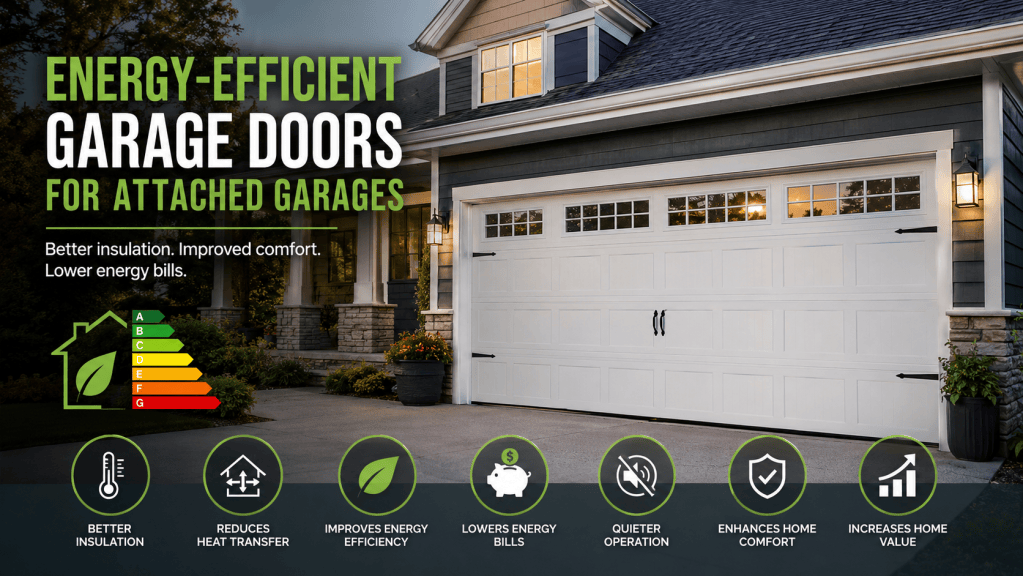
Energy-Efficient Garage Doors for Attached Garages
How Insulation, Thermal Performance, and Better Door Design Can Improve Comfort and Energy Efficiency
An attached garage can have a bigger effect on your home’s comfort and energy use than many homeowners realize. Because the garage shares at least one wall with the residential living space, the garage door, walls, windows, and surrounding structure can all influence heat transfer and energy loss. Choosing energy-efficient garage doors for attached garages can help create a more comfortable transition between indoor and outdoor areas while supporting better overall energy efficiency.
Here are the key features homeowners should consider when choosing an energy-efficient garage door.
1. Choose a Garage Door With Strong Insulation
One of the most important factors in an energy-efficient garage is the level of insulation built into the garage door. An insulated garage door can help reduce the movement of heat between the garage and the outdoors, which may be particularly valuable when the garage is directly connected to the home.
The insulation material and construction affect the door’s thermal performance. Higher-quality doors typically use layered construction that reinforces the entire build while helping the garage maintain a more stable temperature.
For homeowners who use their garage as a workshop, storage area, home gym, or entry point into the house, better insulation can also make the space more comfortable throughout the year.
2. Look for a High R-Value
When comparing energy efficient garage doors, homeowners should pay close attention to the R-value. This rating indicates how effectively the insulation resists heat flow.
A higher R-value generally means better resistance to heat transfer through the garage door. However, the best choice depends on the home’s climate, garage design, and how the space is used.
For an attached garage, choosing a garage door with an appropriate insulation level can contribute to improved energy efficiency, especially when the garage shares walls with conditioned areas of the home.
3. Consider the Door’s Overall Construction
Insulation is only one part of an energy-efficient garage door. The entire construction of the door can influence its performance.
Homeowners should consider:
- Multiple layers of construction
- Durable exterior materials
- Quality insulation
- Strong weather seals
- Properly fitted panels
- Reliable hardware
- Professional installation
A well-designed garage door combines these elements to create a more effective barrier between the garage and the outdoors. Even the highest-quality insulation may not deliver its full benefits if the door has gaps, damaged panels, or poor installation.
4. Upgrade the Weather Sealing for Door Insulation
Small gaps around a garage door can allow outdoor air to enter the garage and conditioned air to escape. Over time, these gaps can contribute to energy loss and reduce the efficiency of the entire system.
Weatherstripping along the bottom and sides of the garage door helps create a tighter seal. Homeowners should also inspect the perimeter of the opening for worn or damaged seals.
For an attached garage, improving these seals can be especially useful because the garage is physically connected to the home’s residential structure. A properly sealed garage door can help limit unwanted drafts and improve the overall thermal performance of the space.
5. Pay Attention to Garage Door Windows
Windows can add natural light and visual appeal to a garage, but they can also influence energy efficiency. Poorly insulated garage door windows may allow more heat to enter during hot weather or escape during colder conditions.
If windows are important to the design, consider garage doors with insulated glass options. Double-pane or otherwise energy-efficient windows can provide better thermal performance than basic single-pane glass.
The goal is to balance appearance, natural lighting, and energy efficiency without creating unnecessary areas for heat transfer.
6. Select Quality Materials That Support Energy Efficiency
The material used to manufacture a garage door can affect its insulation, durability, and long-term performance. Steel garage doors with insulated cores are a popular option for homeowners who want a combination of strength and thermal efficiency.
Other materials may offer different benefits related to appearance, maintenance, and performance. The right choice depends on the home’s architectural style, climate, and budget.
Rather than focusing on material alone, homeowners should evaluate how the material, insulation, construction, and weather sealing work together as part of the complete garage door system.
7. Think About Your Local Climate for Insulated Garage
The ideal garage door for one home may not be the best choice for another. Climate plays an important role in determining how much insulation and thermal performance a garage door needs.
In hot climates, a well-insulated garage door can help reduce the amount of heat entering the garage. In colder regions, insulation can help limit heat loss and reduce the impact of outdoor temperatures on the attached structure.
Homeowners should consider seasonal temperature changes, humidity, direct sunlight, and how frequently the garage door is opened. These factors can help determine which energy-efficient garage door provides the right combination of performance and value.
8. Don’t Overlook Professional Installation
Even a high-quality garage door may not perform as expected if it is installed incorrectly. Poor installation can create gaps around the panels, affect weather sealing, and reduce the door’s overall efficiency.
Professional installation helps ensure the garage door is properly aligned and that the seals and hardware are correctly fitted. It also allows technicians to identify potential issues with the opening itself.
For homeowners investing in an energy-efficient garage door, proper installation is an important part of protecting that investment and achieving the expected performance.
9. Maintain the Garage Door for Long-Term Performance
Regular maintenance can help preserve the performance of an insulated garage door. Homeowners should periodically inspect the weather seals, panels, rollers, tracks, and other components.
A damaged seal or misaligned panel can affect how tightly the garage door closes. Over time, these small issues may contribute to drafts and energy loss.
Routine maintenance also helps identify problems before they develop into more expensive repairs. Keeping the garage door operating properly supports its overall efficiency while extending the useful life of the system.
10. Consider the Connection Between the Garage and Home for Energy Conservation
An attached garage is more than a place to park a vehicle. It is part of the home’s overall building envelope, which means its design and condition can influence nearby living spaces.
If a bedroom, kitchen, hallway, or other conditioned area shares a wall with the garage, improving the garage door and surrounding insulation can be part of a broader approach to energy efficiency.
Homeowners should look at the entire area rather than focusing only on the garage door. Wall insulation, entry doors, windows, air sealing, and garage door performance can all work together to improve the home’s thermal environment.
Final Thoughts on Energy-Efficient Garage Doors
Choosing energy-efficient garage doors for attached garages means looking beyond appearance and focusing on insulation, weather sealing, and overall thermal performance. When homeowners select a quality garage door, maintain proper insulation, and address gaps or worn seals, they can help reduce heat transfer and improve comfort between the garage and the rest of the home. From upgrading an outdated garage door to choosing better-insulated materials and investing in professional installation, every improvement can support greater energy efficiency while extending the life of the garage door system.
If you’re ready to improve your home’s energy efficiency, need professional garage door installation, repair, maintenance, or replacement services, All Pro garage doors provides expert residential garage door services tailored to your home’s needs. Their experienced technicians serve homeowners throughout St. Petersburg, Dunedin, Holiday and surrounding communities, helping residential properties maintain efficient, reliable, and long-lasting garage doors.