
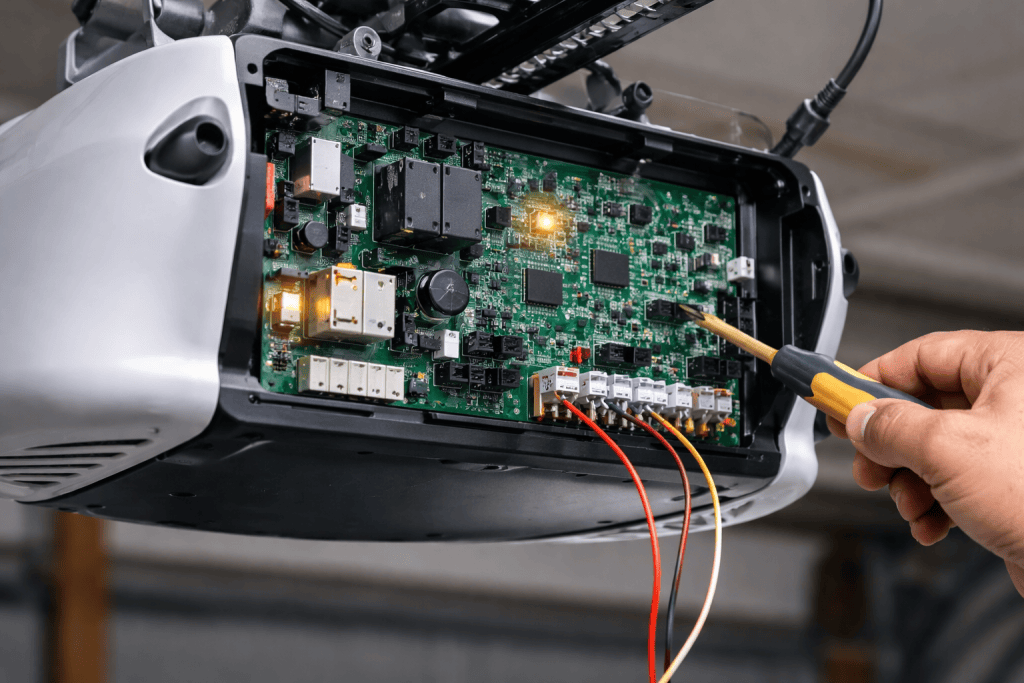
Garage Door Opener Logic Board Failure Explained
What Is a Logic Board in a Garage Door Opener?
The logic board is the central hub that keeps a garage door opener running smoothly, coordinating all electronic signals and ensuring safe, efficient operation.
- Manages communication between remotes, wall controls, keypads, safety sensors, and the motor
- Receives input commands and determines the proper system response
- Activates the correct door and opener circuits to move the door safely
- Regulates safety features like auto-reverse and sensor alignment
- Monitors system performance in real time to maintain correct operation
- Detects irregular signals and can halt operation to prevent damage
- A failing logic board can cause unresponsive remotes, intermittent function, or a door that won’t open or close properly
Altogether, these functions show that the logic board is more than just a switchboard—it’s the brain of the garage door system. Its ability to interpret inputs, manage power flow, and enforce safety protocols explains why any degradation can quickly affect the entire opener, making it one of the most critical components to maintain.
Common Signs of Board Failure
As a logic board begins to degrade, a garage door opener often starts showing inconsistent or confusing behavior that can be difficult to diagnose at first.
- The garage door opener stops responding entirely
- Operation becomes intermittent or unreliable
- The door won’t open even though remotes appear to work
- Keypads and wall controls fail at the same time
Taken together, these symptoms point to a central control issue rather than isolated component failures, since the logic board coordinates signals between all input devices and the motor. When multiple access points fail or behave inconsistently at once, it typically indicates the board is no longer processing commands correctly.
What Causes Circuit Board Issues?
Garage door logic boards can fail for a variety of reasons, often related to environmental stress or normal wear over time.
- Power surges can damage electronic components
- Moisture exposure may corrode internal circuits
- Overheating can degrade sensitive electronics
- General wear gradually breaks down circuit pathways
- Degraded circuits lead to logic inconsistencies and eventual failure
These factors collectively explain why even well-maintained openers can experience logic board issues. Understanding the common causes highlights the importance of protecting the system from electrical spikes, moisture, and excessive heat to prolong its lifespan.
Diagnosing Door Circuit and Opener Circuit Problems
When diagnosing a garage door opener, technicians focus on identifying where the system’s failures originate, narrowing down the issue to the most likely culprit.
- Inspect door circuit and opener circuit connections for continuity
- Check wiring and sensors to ensure they function correctly
- Determine if the logic board is causing the problem when other components are operational
This approach shows that the logic board often serves as the central point of failure when all peripheral systems are working. By systematically ruling out wiring and sensor issues, technicians can isolate the source, confirming that board degradation is responsible for the opener’s malfunction.
LiftMaster and Chamberlain System Considerations
Certain garage door brands rely on specialized control systems, which can affect how failures are diagnosed and repaired.
- LiftMaster and Chamberlain use proprietary logic board systems
- Many of these systems are integrated with MyQ technology for smart control
- Diagnosing failures often requires brand-specific knowledge and tools
Because these boards are designed with unique protocols and smart features, understanding the brand’s system is essential. Technicians familiar with these proprietary setups can accurately identify issues and ensure repairs restore both basic operation and advanced functionality.
Board Replacement vs Opener Replacement
When a garage door logic board fails, the best solution depends on the age of the system and the condition of other components.
- Replacing the logic board is usually the most cost-effective option
- Motor and mechanical parts should be functional for board replacement to be viable
- Older systems or those in commercial/high-cycle settings may need a full opener replacement
Considering these factors helps determine whether a simple board swap will restore reliable operation or if a complete system upgrade is more practical. This approach balances cost, longevity, and performance, ensuring the opener continues to operate safely and efficiently.
Preventing Future Logic Board Issues
Protecting a garage door logic board from damage starts with simple, proactive measures that address common causes of failure.
- Perform regular maintenance on the opener and its components
- Use surge protection to guard against electrical spikes
- Keep the system and surrounding area dry to prevent moisture damage
- Inspect wiring and sensors periodically for early signs of wear
By following these steps, you can significantly extend the life of the logic board and reduce the likelihood of unexpected malfunctions. Proactive care not only helps avoid costly repairs but also ensures the garage door operates reliably and safely over time.
A garage door opener logic board failure can disrupt daily routines, but understanding how the board, circuit board, and overall system operate helps you identify issues early. Whether it’s a minor board replacement or a full system upgrade, addressing problems promptly ensures your garage door operates safely and efficiently.
Final Thoughts
If you’re experiencing a garage door opener logic board failure, it’s important not to ignore the warning signs. A failing logic board may seem like a minor issue at first, but even small malfunctions can affect how your garage door opens, closes, and responds to remotes, keypads, and sensors. Addressing logic board problems early can help prevent additional strain on the motor, door circuit, and other components that keep your garage door operating smoothly.
In many cases, a board replacement can restore proper functionality, but in older or high-cycle systems, a full opener replacement may be the most effective solution. Regular maintenance, surge protection, and professional inspections can extend the life of your garage door opener and prevent costly failures down the road. If you’re unsure whether your system needs a board replacement or a full opener upgrade, a professional evaluation can determine the best course of action. Expert repair, installation, and replacement services from trusted providers like All Pro garage doors ensure your garage door opener operates safely and efficiently. Whether it’s for a residential garage or a commercial property in Dunedin, Odessa, Safety Harbor, or anywhere in Florida, addressing a failing logic board quickly helps keep your doors secure, reliable, and ready for daily use. Contact us today to schedule an inspection and get professional help restoring your garage door opener system.