
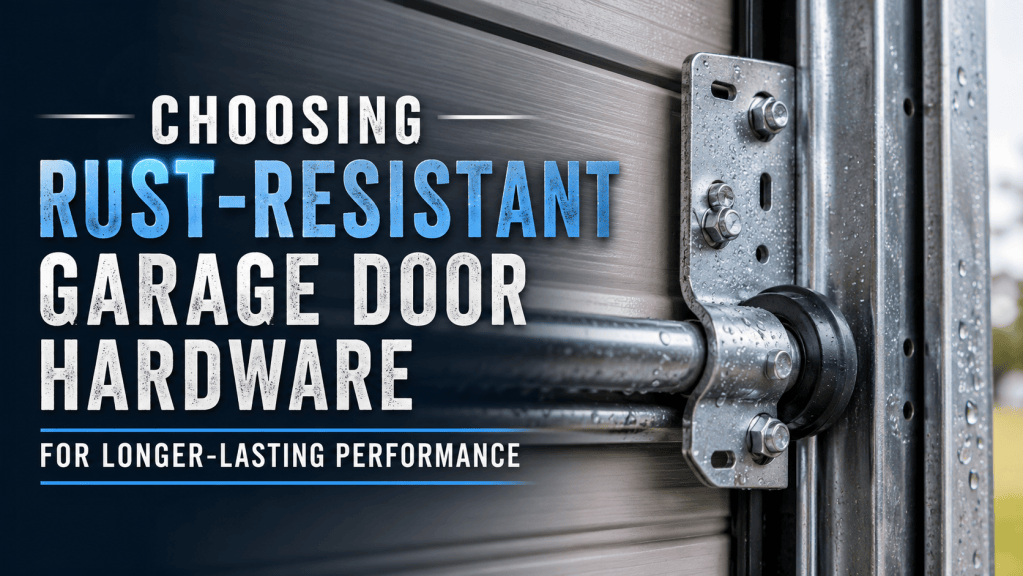
Choosing Rust-Resistant Garage Door Hardware
Your garage door is only as reliable as the hardware that keeps it moving safely and smoothly. While many homeowners focus on the door itself, components like hinges, rollers, tracks, springs, brackets, and fasteners play an equally important role in daily performance. Choosing durable door materials and corrosion-resistant hardware can significantly extend the lifespan of your entire system.
In humid and coastal climates, moisture, salt air, and changing weather conditions can quickly cause metal parts to corrode. Selecting rust-resistant stainless steel, galvanized steel, or zinc alloy hardware helps prevent rust, reduces long-term door maintenance, and keeps your garage door operating reliably. Whether you’re upgrading existing components or installing a new system, investing in quality hardware is a smart long-term decision.
1. Why Rust Resistance Matters
Garage door hardware is constantly exposed to environmental conditions that can speed up corrosion. Rain, humidity, coastal salt spray, and temperature fluctuations gradually wear away protective coatings, allowing rust to develop.
When hardware begins to corrode, homeowners may notice:
- Squeaking or grinding noises during operation
- Difficulty opening or closing the garage door
- Premature wear on moving components
- Increased strain on the garage door opener
- Reduced overall safety and reliability
Rust-resistant materials help prevent these issues while keeping the entire garage door system operating efficiently.
2. The Best Materials for Rust-Resistant Garage Door Hardware
Not all garage door hardware offers the same level of corrosion protection. Choosing the right material depends on your climate and maintenance expectations.
Stainless Steel
Stainless steel is one of the most durable options available. It naturally resists rust without relying solely on protective coatings, making it an excellent choice for coastal homes.
Benefits include:
- Excellent corrosion resistance
- Long service life
- Minimal maintenance
- Attractive appearance
Galvanized Steel
Galvanized steel features a protective zinc coating that shields the metal from moisture and corrosion.
Advantages include:
- Affordable compared to stainless steel
- Strong structural performance
- Suitable for most residential garages
- Good protection against everyday moisture
Powder-Coated Hardware
Powder-coated components provide an additional protective finish that resists moisture, scratches, and UV exposure.
Common powder-coated hardware includes:
- Brackets
- Tracks
- Reinforcement plates
- Mounting hardware
3. Garage Door Parts That Should Be Rust Resistant
While every metal component benefits from corrosion protection, some parts deserve special attention because they move constantly or support significant weight.
Hinges
Hinges connect each garage door section and allow smooth movement as the door travels along the tracks.
Choose:
- Stainless steel hinges
- Heavy-duty galvanized hinges
- Commercial-grade replacements
Rollers
Rusty rollers can become noisy, rough, and difficult to operate.
Look for:
- Nylon rollers with sealed bearings
- Stainless steel roller stems
- High-cycle rollers
Tracks
Garage door tracks guide the door during operation. Corrosion inside the track can interfere with smooth movement.
Inspect for:
- Surface rust
- Bent sections
- Flaking protective coatings
Brackets and Fasteners
Even small bolts and screws can become weak after years of corrosion.
Replace aging:
- Lag bolts
- Nuts
- Washers
- Mounting brackets
4. Coastal Homes Need Extra Protection
Homes located near the ocean experience much harsher conditions than inland properties. Salt particles carried by the wind accelerate corrosion, even if your garage door never comes into direct contact with seawater.
In coastal communities, homeowners should prioritize:
- Marine-grade stainless steel hardware
- Regular hardware inspections
- Frequent cleaning to remove salt deposits
- Protective lubricants designed for coastal environments
Taking these precautions can significantly increase the lifespan of your garage door system.
5. Don’t Forget Regular Maintenance
Even the best rust-resistant hardware benefits from routine maintenance. Preventive care helps preserve protective finishes and allows small problems to be addressed before they become costly repairs.
A simple maintenance routine includes:
- Washing hardware with mild soap and water
- Removing dirt and salt buildup
- Applying garage door lubricant to moving parts
- Tightening loose bolts and brackets
- Inspecting components for corrosion or excessive wear
Scheduling annual professional inspections also helps identify hidden issues before they affect performance.
6. When Should Garage Door Hardware Be Replaced?
Rust isn’t always cosmetic. If corrosion weakens structural components, replacement becomes the safest solution.
Consider replacing hardware if you notice:
- Heavy rust scaling
- Cracked hinges
- Worn or seized rollers
- Corroded brackets
- Loose mounting hardware
- Excessive vibration during operation
Replacing multiple aging components at the same time often restores smoother, quieter operation while preventing future breakdowns.
Final Thoughts
Choosing rust-resistant garage door hardware is one of the best ways to protect your investment and keep your garage door operating safely for years to come. Durable materials like stainless steel and galvanized steel help resist corrosion, reduce maintenance, and improve the performance of your entire garage door system.
If your current hardware shows signs of rust or wear, the experienced team at AllPro Garage Doors can inspect your system and recommend the best replacement options. Whether you need hardware upgrades, garage door repairs, or a complete installation, they proudly serve homeowners throughout Clearwater, Dunedin, and Tampa, helping ensure dependable performance in every season.
Frequently Asked Questions
Is stainless steel better than galvanized steel?
Yes. Stainless steel generally provides superior corrosion resistance, especially in coastal environments. Galvanized steel remains a durable and cost-effective choice for many residential applications.
Can rusty garage door hardware be repaired?
Light surface rust may be cleaned and treated. However, heavily corroded components that have lost structural strength should be replaced.
How often should garage door hardware be inspected?
Most homeowners should inspect their garage door hardware at least twice a year. Coastal homes may benefit from more frequent inspections because salt air accelerates corrosion.
Does lubricating hardware prevent rust?
Lubrication helps reduce friction and provides some moisture protection, but it should be combined with regular cleaning and inspections for the best results.
Is replacing hardware better than replacing the entire garage door?
If the door panels remain in good condition, replacing worn hardware can often restore safe and reliable operation without requiring a full garage door replacement.