
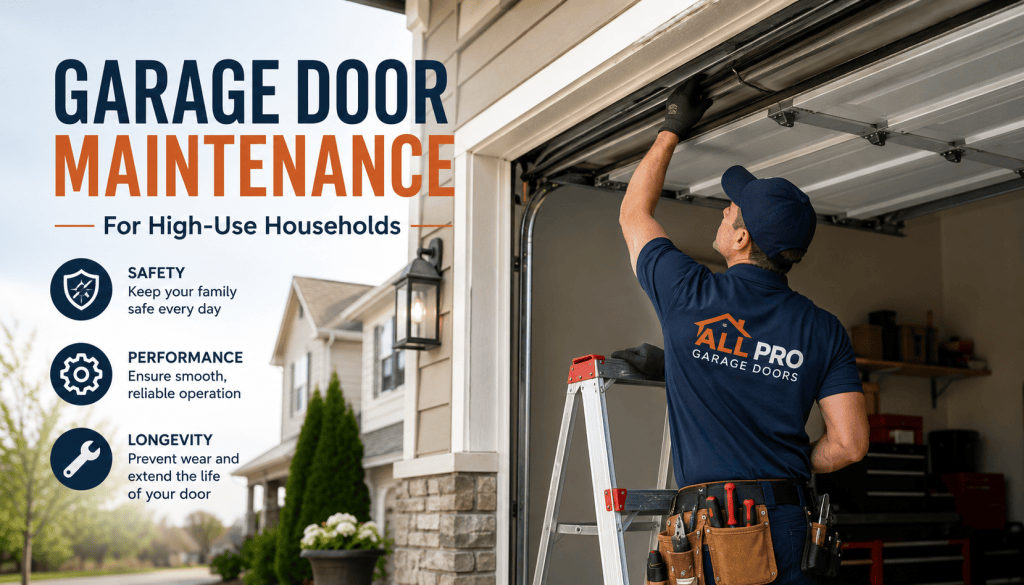
Garage Door Maintenance for High-Use Households: A Practical Door Care Guide
A Reliable Routine for Busy Homes
In a busy home, the garage often functions as the main entrance. Family members leave for work, take children to school, return from errands, move sports equipment, and bring groceries inside throughout the day. That constant activity means the garage door may complete far more cycles than it would in a lower-use property.
Frequent movement places added stress on rollers, tracks, springs, openers, seals, and hardware. Without regular maintenance, small problems can become loud operation, uneven movement, unexpected downtime, or the need for garage door repair. A practical routine helps homeowners protect the garage door system, reduce avoidable wear, and keep daily access dependable.
The goal is not to perform complicated repairs at home. Instead, homeowners should clean accessible areas, check visible hardware, test approved features, and schedule professional service when necessary. High-tension parts, electrical problems, and structural concerns should always be handled by trained technicians.
1. Create a Routine for the Entire Year
High-use garage doors should be reviewed more often than doors that open only a few times each week. A simple seasonal routine makes it easier to notice changes before they become expensive problems.
Start by observing the garage door once while it opens and once while it closes. Stand inside the garage at a safe distance and listen for grinding, scraping, rattling, squeaking, or popping. Watch whether the door moves smoothly, remains level, and reaches the fully open and closed positions without hesitation.
A basic homeowner routine can include:
- A quick visual review every one to three months
- Cleaning exterior surfaces and accessible areas as needed
- Testing approved safety features several times a year
- Scheduling expert service based on usage and system age
- Reviewing the owner’s manual before lubricating mechanical systems
Heavy daily use may justify more frequent attention. The best schedule depends on the age of the garage door, the number of daily cycles, local weather, and manufacturer guidance.
2. Check Hinges and Visible Hardware
Repeated movement can gradually loosen fasteners and place strain on mounting points. During a visual review, check brackets, bolts, and other accessible hardware for obvious movement, corrosion, or damage. Do not tighten high-tension hardware or remove parts connected to springs or cables.
Look at the hinges for cracks, loose mounting points, or unusual movement. High-use doors place repeated pressure on these joints, so minor wear can become more noticeable over time. The rollers should travel smoothly without wobbling, dragging, or jumping.
Also check the overhead area from a safe position. If any hardware appears bent, detached, or unstable, stop using the garage door and arrange service. Replacing a worn part early can help prevent extra strain on nearby sections of the system.
3. Clean Exterior Surfaces and Weather Barriers
Dirt, road dust, pollen, moisture, and coastal salt can collect on garage doors throughout the year. Homeowners can wash exterior surfaces with mild soap, water, and a soft cloth when those methods are approved for the material and finish.
Avoid harsh chemicals, abrasive pads, and pressure settings that could damage paint, windows, or protective coatings. After cleaning, check the bottom seal and weather stripping. Cracks, flattening, gaps, or brittleness may allow water, pests, dirt, and outside air to enter the garage.
Keeping the exterior clean also makes dents, rust, peeling finishes, and impact damage easier to see. Wooden doors may require different care than steel, aluminum, composite, or glass-panel designs, so always follow the manufacturer’s recommendations.
4. Lubricate Approved Moving Parts
Proper lubrication can reduce friction and help many garage doors operate more quietly. However, every moving part does not require the same product, and more lubricant is not always better.
Consult the owner’s manual before applying anything. In many systems, an approved garage door lubricant may be used sparingly on rollers with metal bearings, pivot points, and selected hardware. Apply only the amount recommended, then wipe away excess product so it does not attract dust.
Do not automatically use a penetrating oil lubricant on every moving area. Some products are designed to loosen stuck parts rather than provide lasting protection. Avoid coating nylon roller surfaces, tracks, belts, electronics, or any area the manufacturer says should remain dry.
When approved parts become noisy, lubricate them according to the instructions. If noise continues after proper care, the issue may involve worn rollers, loose hardware, an opener problem, or another condition that needs professional attention.
5. Keep Tracks Clear Without Repositioning Them
The garage door tracks should remain free of loose debris, spiderwebs, stored items, and objects that could interfere with travel. Check for buildup, then use a dry cloth or soft brush to clean accessible surfaces without applying grease to the track.
Inspect each door track for dents, gaps, loose mounting points, or areas where the rollers appear to rub. A damaged track can cause shaking, binding, uneven travel, or excessive noise.
Homeowners should not bend, hammer, loosen, or reposition tracks. Track alignment affects the entire system, and an incorrect adjustment may create a dangerous condition. If a track is visibly damaged or the garage door begins moving unevenly, arrange professional service.
6. Assess Garage Door Balance
Correct door balance allows the opener to move the garage door without carrying more weight than intended. A door that feels unusually heavy, rises unevenly, or will not remain in a partially open position may have a balance problem.
Follow the manufacturer’s instructions before disconnecting an automatic system. Some homeowners may be directed to close the door fully, disengage the opener, and carefully lift the door by hand. If the door drops, rises rapidly, binds, or feels too heavy, reconnect nothing until a technician evaluates it.
The springs counterbalance substantial weight. Depending on the design, the system may use torsion springs or another spring configuration. A visible gap, corrosion, stretched coils, or uneven positioning can signal trouble.
Never touch, adjust, or fix springs and cables. Torsion hardware can release significant energy without warning. A professional spring inspection is the appropriate response when the garage door is unbalanced, a cable appears frayed, or a spring looks damaged.
7. Test Automatic Controls and Reversal Features
The garage door opener should respond consistently to the wall control, remote controls, keypad, and other approved accessories. Watch for delayed movement, intermittent response, unusual vibration, or new sounds.
Follow the manual to test the automatic reversal feature and photo-eye sensors. The sensors should be aligned, securely mounted, and free of dirt. Use only the manufacturer’s approved testing method, and never stand beneath a moving door.
If the garage door opener does not reverse correctly, stop automatic use until the problem is corrected. Faulty sensors, incorrect opener calibration, wiring trouble, or excessive force settings may prevent reliable operation.
Homeowners should also inspect remote controls and replace weak batteries when needed. If multiple openers are used in the household, confirm that each device activates the intended door and that children understand the controls are not toys.
8. Maintain Chain-Drive and Other Openers
Different garage door openers require different care. A chain-drive unit may produce more sound than a belt-drive model, but new rattling, slapping, or jerking should not be ignored.
Review the manual for chain inspection and approved lubrication instructions. The chain should not be excessively loose, visibly damaged, or rubbing against surrounding areas. Do not attempt a major tension adjustment unless the manufacturer clearly identifies it as a homeowner task.
Belt-drive, screw-drive, wall-mounted, and smart openers may have separate requirements. Keep the housing clean, avoid blocking ventilation, and review alerts from connected systems. A qualified technician can assess worn gears, travel limits, force settings, or electrical faults.
Routine opener care helps reduce strain, but it cannot correct a broken spring, damaged track, or heavily worn rollers. When the automatic system sounds strained, stop repeated operation and identify the underlying cause.
9. Watch for Changes in Daily Performance
Busy households often become accustomed to normal garage sounds, making new symptoms easier to notice. Pay attention when door operation becomes slower, louder, uneven, or less predictable.
Warning signs include:
- Shaking or jerking during travel
- A gap beneath one side when closed
- Repeated stopping or reversing
- Scraping, grinding, or popping sounds
- Delayed response from the door opener
- A garage door that feels heavier than usual
- Frayed cable strands or loose-looking hardware
- Visible damage near springs, rollers, or panels
Do not keep cycling the system to see whether the problem disappears. Repeated use can worsen damage and place more stress on the opener. Early service may prevent a minor issue from affecting several parts of the garage door.
10. Schedule Inspections for Heavy Daily Use
Professional maintenance is especially valuable when garage doors serve as the primary household entrance. A trained technician can evaluate areas that homeowners cannot safely inspect or repair.
A professional visit may include a detailed spring-system review, roller and hardware check, balance evaluation, opener settings, travel testing, sensor verification, and examination of cables and mounting points. The technician can also identify worn parts before they cause a breakdown.
How often inspections should be scheduled depends on daily cycles, the age of the system, climate exposure, previous repairs, and manufacturer guidance. Some busy homes may benefit from annual service, while older systems or unusually high-use doors may require a different schedule.
Keep records of service dates, replaced parts, and recurring symptoms. This information helps technicians understand how the garage door has changed and whether certain parts are wearing faster than expected.
11. Know Which Tasks Require a Technician
Homeowners can safely handle basic cleaning, visual reviews, remote batteries, and manufacturer-approved testing. Complex repairs should remain with trained professionals.
Call for service when the garage door becomes stuck, hangs unevenly, falls unexpectedly, leaves the opening unsecured, or makes loud mechanical sounds. Assistance is also necessary when springs break, cables fray, panels separate, tracks bend, or the opener repeatedly fails.
Avoid working on torsion systems, winding drums, bottom fixtures, high-tension hardware, electrical wiring, and structural mounting points. These areas can cause serious injury or additional property damage when handled incorrectly.
A professional repair is not only about restoring movement. It should also address the reason the failure occurred, confirm that the system is balanced, and verify that automatic features function correctly before normal use resumes.
Final Thoughts
Keeping garage door maintenance for high-use households a priority means staying proactive with regular checks, proper lubrication, and professional service. When your garage door is opened and closed multiple times each day, routine maintenance can help reduce wear, improve safety, and prevent unexpected breakdowns. From checking rollers and hinges to testing the opener and inspecting critical components, every step helps keep your garage door operating smoothly while extending the life of your entire system.
If you’re ready to improve the performance and reliability of your home’s garage door, need professional installation, repair, maintenance, or replacement services,All Pro garage doors provides expert residential garage door installation, replacement, and repair services tailored to your household’s needs. Their experienced technicians serve homeowners throughout Dunedin, New Port Richey, Palm Harbor, Citrus Park, and surrounding communities, helping every residential property maintain safe, reliable, and long-lasting garage doors.