
Garage Door Remote Not Working: Troubleshooting Guide
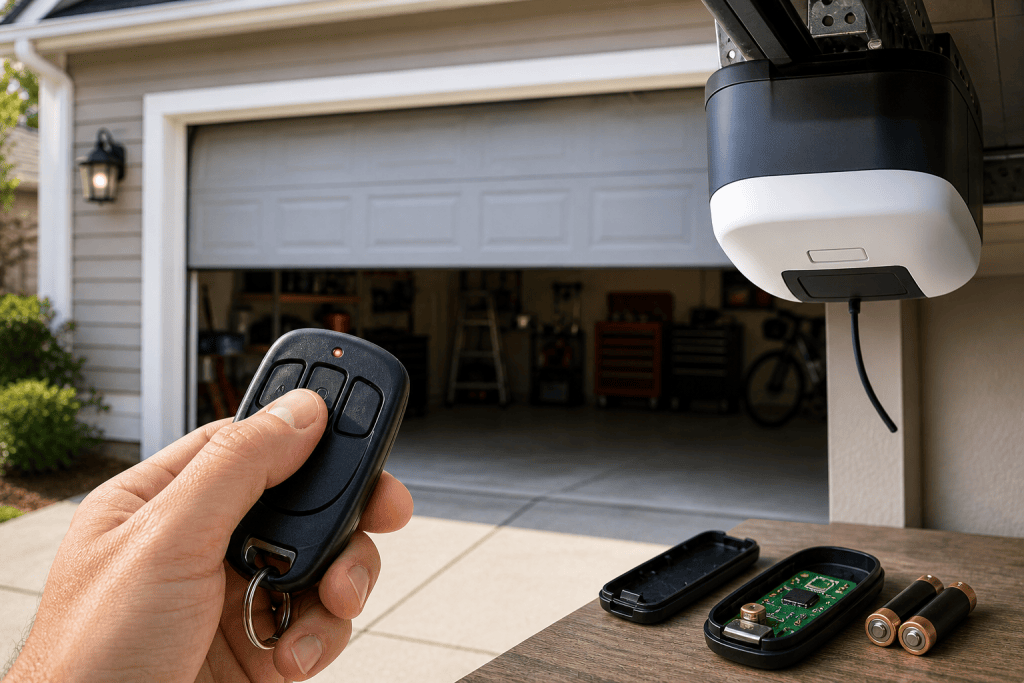
1. Check for Dead Batteries
Remote control issues with garage door systems often come down to the simplest possible cause, which makes initial checks important before assuming a larger fault.
- Dead batteries are the most common reason a remote stops working
- Check the remote batteries first before troubleshooting anything else
- Replace batteries if they are weak or fully drained
- A failing battery can interrupt or weaken the signal transmission
- Restoring power often immediately resolves remote issues
Taken together, these points emphasize that remote failure is frequently caused by loss of basic power rather than system malfunction. Because the remote relies entirely on battery strength to send a clear signal, verifying and replacing batteries is the most efficient first step in restoring normal operation.
2. Test the Remote Signal
Garage door remotes rely on a clear signal path, and simple positioning issues can sometimes prevent proper operation.
- Move closer to the garage door opener when using the remote
- Press the remote control again while within closer range
- Check for weak or obstructed signal transmission
- Identify possible interference between the remote and opener
- Observe whether proximity improves responsiveness
Taken together, these steps highlight how signal strength and range can directly affect performance. If the remote works only when closer to the opener, it often indicates interference, range limitations, or transmission issues that may need further attention beyond basic troubleshooting.
3. Inspect the Lock Button
Garage door systems often include a built-in lock function on the wall control that can unintentionally disable remote operation.
- Many wall-mounted garage units include a lock button feature
- When activated, it disables remote control functionality
- The garage door remote will not respond while the lock is on
- The system must be unlocked before remotes will work again
- This setting is often mistaken for a remote or opener malfunction
Taken together, these points show that remote failure is sometimes caused by a simple safety or security setting rather than a hardware issue. Checking the wall control lock function can quickly restore normal operation and prevent unnecessary troubleshooting of the remote or opener system.
4. Reprogram the Opener Remote
Garage door remotes can occasionally lose synchronization with the opener, especially after power interruptions or system resets.
- The remote may lose its programmed connection to the opener
- Follow the manufacturer’s troubleshooting steps to re-sync the remote
- Use the opener’s “learn” or programming button when available
- Re-pair the remote by completing the required button sequence
- Test the remote after syncing to confirm proper operation
Taken together, these steps show that remote issues are not always hardware-related but can stem from lost programming. Re-syncing restores communication between the remote and opener, ensuring the system recognizes the signal and responds as intended.
5. Check the Antenna and Sensors
Garage door remote performance depends on both signal reception at the opener and proper alignment of system components.
- Check that the opener’s antenna is hanging freely and not damaged
- Ensure the antenna is not bent, blocked, or tucked away
- Inspect for any physical wear or breakage that could weaken signal reception
- Verify that safety sensors on the door are properly aligned
- Recognize that sensor misalignment can interfere with overall system response
Taken together, these checks highlight how both the antenna and sensors play roles in communication and operation. When either is obstructed, damaged, or misaligned, the system may fail to respond consistently, even if the remote itself is functioning correctly.
6. Look for Wiring or Circuit Issues
Garage door opener issues can sometimes stem from internal electrical problems rather than external components like remotes or sensors.
- Faulty wiring inside the opener can interrupt signal transmission
- Damaged circuit boards may prevent proper system communication
- Electrical faults can cause intermittent or complete loss of response
- These issues often require inspection beyond basic troubleshooting
- Professional repair may be needed to safely resolve internal damage
Taken together, these points show that when basic fixes fail, the problem may be rooted in the opener’s internal electronics. Wiring faults or circuit board damage can disrupt normal operation at a fundamental level, making expert diagnosis and repair necessary to restore reliable performance.
7. Consider Replacement or Professional Help
If garage door remotes still do not respond after basic troubleshooting, the issue may require replacing hardware or professional diagnosis.
- Replace the garage door remote if it is no longer transmitting reliably
- Confirm whether the issue persists across multiple remotes, if available
- Consider deeper troubleshooting of the opener system itself
- Call a qualified technician for advanced diagnostics and repair
- Address potential internal faults in wiring, receiver, or circuit components
Taken together, these steps mark the transition from basic user-level fixes to hardware replacement or professional service. When remotes consistently fail despite resets, battery changes, and reprogramming, the problem is often rooted in the opener system rather than the remote itself, requiring more in-depth repair or replacement to restore full functionality.
Final thoughts About Garage Remote Door Opener
When a garage door remote isn’t responding, the issue usually comes down to small but critical factors like dead batteries, signal disruption, or syncing problems between the opener remote and the garage door opener. In many cases, simple opener troubleshooting steps—such as replacing the remote’s batteries first, checking the lock button, or re-syncing the garage remote—can quickly restore proper remote functionality without needing major repair.
It’s also important to inspect the system as a whole. A weak antenna, misaligned sensors, or worn circuit boards inside the opener can interfere with remote signals and cause inconsistent performance. Taking a few minutes to reset garage settings or reprogram the opener can often resolve these issues before they escalate.
Routine maintenance goes a long way in preventing future problems. For persistent issues or complete system failures, reach out to All Pro garage doors. A professional garage door repair, installation and replacement services to ensure your garage door system stays safe, responsive, and dependable for everyday use. Whether it’s for a residential garage or a commercial property in St. Petersburg, Tampa, Tarpon Springs , or anywhere in Florida.
FAQs About Garage Door Remote Issues
A garage remote can stop functioning due to interference, worn components, or connectivity loss with the garage door opener. In many cases, a weak signal or disrupted remote signals affects overall remote functionality, especially if you’re farther from the garage.
To reset garage systems, locate the “learn” button on your garage door opener and follow the manufacturer’s pairing steps. This opener troubleshooting method helps reconnect the opener remote and restore proper communication.
Yes, if the issue is within the garage door opener—such as damaged circuit boards, antenna problems, or wiring faults—it can impact all remotes connected to the system, not just a single garage remote.
Before scheduling a repair, inspect the lock button, sensors, and antenna. Also confirm that your remote control is synced correctly with the garage door opener and that no obvious signal interference is present.
Smart integrations like the myQ app can supplement or replace physical remote controls, allowing you to operate your garage door from your phone. However, keeping a backup garage door remote is still useful in case of connectivity issues.