
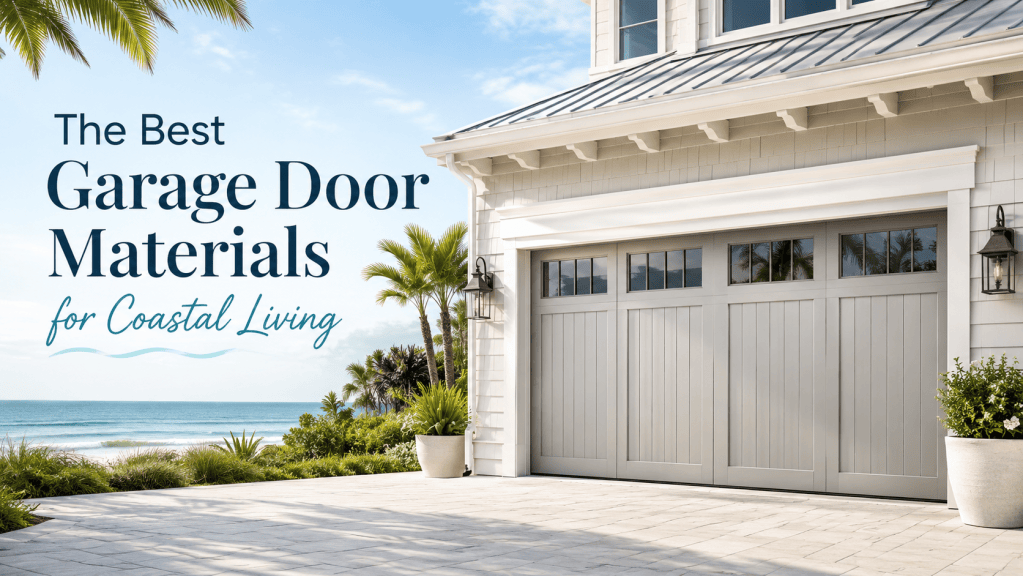
The Best Garage Door Materials for Coastal Living
Living near the coast comes with incredible views, fresh ocean breezes, and a relaxing lifestyle—but it also means your home is constantly exposed to salt air, humidity, strong winds, and harsh weather. These conditions can take a toll on exterior materials, including your garage door. Choosing the right garage door material is one of the best ways to protect your investment while reducing maintenance and extending the life of your door.
Whether you’re building a new home or replacing an aging garage door, here’s what you need to know about the best garage door materials for coastal living.
Why Coastal Homes Need Specialized Garage Doors
Salt carried by ocean air is highly corrosive. Combined with Florida’s humidity, frequent rain, and intense sun exposure, it can quickly damage standard garage doors.
Common problems include:
- Rust and corrosion
- Paint peeling and fading
- Warped panels
- Damaged hardware
- Reduced lifespan
- Increased maintenance costs
Selecting materials designed to withstand coastal environments helps keep your garage door looking great and operating reliably for years.
1. Aluminum Garage Doors
Aluminum is one of the most popular choices for coastal homes because it naturally resists rust.
Pros
- Naturally corrosion-resistant
- Lightweight
- Low maintenance
- Modern appearance
- Available with glass panel
Cons
- Less resistant to dents
- Can be more expensive than steel
- May provide less insulation without added thermal layers
Aluminum works especially well for homeowners who want a sleek, contemporary design while minimizing maintenance.
2. Fiberglass Garage Doors
Fiberglass is another excellent option for coastal climates because it won’t rust or corrode.
Pros
- Salt-resistant
- Moisture-resistant
- Won’t rot
- Lightweight
- Can mimic real wood
Cons
- Can crack under heavy impact
- Colors may fade over time
- Lower insulation than some steel models
Fiberglass offers the appearance of wood without many of the maintenance challenges that come with natural materials.
3. Vinyl Garage Doors
Vinyl has become increasingly popular for homeowners seeking durability with minimal upkeep.
Pros
- Rust-proof
- Moisture-resistant
- Dent-resistant
- Easy to clean
- Doesn’t require frequent repainting
Cons
- Fewer style options
- Limited color selections
- Extreme heat may affect some lower-quality products
Vinyl is a practical choice for busy homeowners who want dependable performance with very little maintenance.
4. Galvanized Steel Garage Doors
Steel remains one of the most common garage door materials, but not all steel performs equally well near the ocean.
High-quality galvanized steel features a protective zinc coating that helps resist corrosion.
Pros
- Strong and durable
- Available in many styles
- Excellent insulation options
- Affordable
Cons
- Protective coating can wear over time
- Scratches should be repaired promptly
- Requires periodic maintenance near saltwater
For coastal homes, powder-coated or multi-layer finished steel doors generally perform better than standard painted steel.
5. Composite Garage Doors
Composite garage doors combine engineered wood fibers with durable synthetic materials to create a highly weather-resistant product.
Pros
- Wood-like appearance
- Resistant to moisture
- Won’t rot
- Lower maintenance than natural wood
- Durable finish
Cons
- Higher initial investment
- Heavier than aluminum
- Product quality varies by manufacturer
Composite doors are an excellent option if you want traditional curb appeal without the maintenance of real wood.
Should You Choose Wood Garage Doors?
Although beautiful, natural wood generally isn’t the best choice for coastal environments.
Salt air and constant moisture can cause:
- Warping
- Rot
- Cracking
- Frequent repainting
- Higher maintenance costs
If you love the appearance of wood, consider composite or fiberglass alternatives that replicate the same look while offering better weather resistance.
Don’t Forget About the Hardware
The garage door itself isn’t the only component exposed to salt air.
For the best long-term performance, choose corrosion-resistant hardware such as:
- Stainless steel hinges
- Stainless steel rollers
- Galvanized springs
- Rust-resistant tracks
- Corrosion-resistant fasteners
Upgrading these components can significantly extend the life of your entire garage door system.
Insulation Still Matters
Even in warm coastal climates, insulated garage doors provide several benefits:
- Improved energy efficiency
- Better temperature control
- Reduced outside noise
- Increased durability
- Greater structural strength during storms
Many insulated garage doors also feature multiple protective layers that improve resistance to corrosion.
Maintenance Tips for Coastal Garage Doors
Even the most durable materials benefit from regular maintenance.
To maximize the lifespan of your garage door:
- Rinse the door with fresh water every few weeks to remove salt buildup.
- Wash the surface using mild soap and water.
- Inspect hardware for signs of corrosion.
- Lubricate moving parts with garage door lubricant.
- Touch up scratches promptly.
- Schedule annual professional inspections.
Routine care helps prevent small issues from becoming costly repairs.
How to Choose the Right Material
The ideal garage door depends on your priorities.
| Priority | Recommended Material |
| Lowest maintenance | Aluminum |
| Best corrosion resistance | Fiberglass |
| Budget-friendly | Galvanized Steel |
| Premium appearance | Composite |
| Modern style | Aluminum & Glass |
| Traditional wood look | Composite |
If your home is located directly on the coast or within a few miles of saltwater, corrosion resistance should be one of your top priorities.
Signs It’s Time to Replace Your Garage Door
If your current garage door shows any of these issues, replacement may be the more cost-effective solution:
- Extensive rust
- Warped panels
- Frequent repairs
- Corroded hardware
- Structural damage
- Poor insulation
- Difficulty opening or closing
Replacing an aging garage door with a coastal-friendly material can improve both curb appeal and long-term reliability.
Final Thoughts
Choosing the best garage door material for coastal living can make a significant difference in your home’s durability, maintenance requirements, and curb appeal. Aluminum, fiberglass, composite, vinyl, and properly protected galvanized steel all offer excellent performance in coastal environments, with each material providing unique advantages depending on your budget and style preferences.
For homeowners in Clearwater, Dunedin, and Holiday, selecting a garage door built to withstand salt air, humidity, and severe weather is especially important. Working with an experienced garage door professional can help ensure you choose a door that offers long-lasting protection, reliable performance, and attractive curb appeal for your coastal home. At AllPro Garage Doors, we provide expert garage door installation, replacement, and maintenance services designed for the unique demands of Florida’s coastal communities.
Frequently Asked Questions
What is the best garage door material for coastal living?
Aluminum, fiberglass, and composite garage doors are among the best choices because they resist rust, moisture, and salt air better than traditional wood or untreated steel.
Are steel garage doors good near the ocean?
Yes, provided they are made from galvanized steel and protected with high-quality coatings. Regular maintenance is important to prevent corrosion.
Do aluminum garage doors rust?
No. Aluminum naturally resists rust, making it one of the most popular materials for coastal homes.
Is wood a good option for beachfront homes?
Natural wood offers timeless beauty but generally requires much more maintenance in coastal climates due to moisture and salt exposure.
How often should I clean a coastal garage door?
Rinsing your garage door every few weeks and washing it periodically helps remove salt